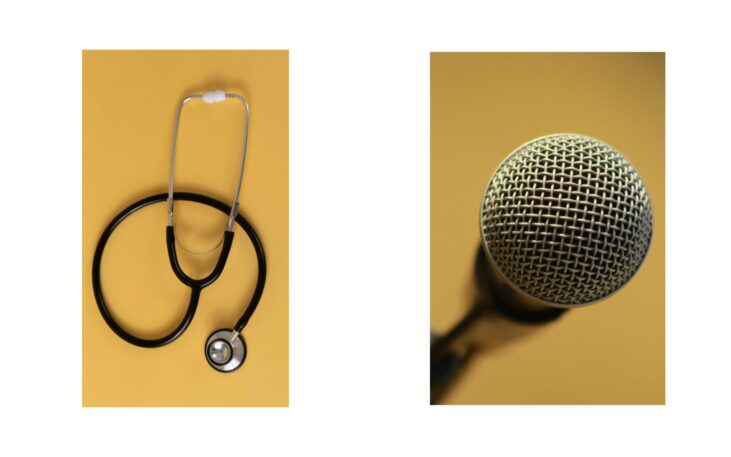
I can’t speak for Dr. Phil or Dr. Oz, but no one becomes a doctor because they crave the spotlight. We pick stethoscopes over microphones. If we’d wanted to spend our days giving speeches, we’d have gone into politics or become motivational speakers in fancy suits.
Nevertheless, consider this, every day —
We attempt to inform and educate patients, colleagues, and trainees.
We attempt to persuade our colleagues, hospital administrators, and the broader community.
We attempt to inspire others to action.
Those are three of the four aims of public speaking (the last one – to entertain)
Whether we like it or not, excellence in communication is a vital skill for physicians. When we speak well, our ideas spread. When our ideas spread, they spark change – whether in a department’s culture, a hospital’s protocols, or a community’s health habits.
But our training nurtures bad communication habits and ossifies them in the following ways:
Training favors jargon over clarity.
Medical school rewards us for presenting cases, using formal conversation structures, and speaking in technical language to other experts. We master sounding smart, not simplifying for non-experts.
Social status shields us from honest feedback.
Patients don’t say, “Excuse me, doctor, you lost me on slide three.” Residents don’t correct attendings. Colleagues nod politely and move on.
Medical culture prizes confidence.
We learn to project certainty even when we’re unsure. Hesitation can scare patients or colleagues. We start believing our performance — I sound sure, therefore I must be a good communicator.
Authority gets confused with influence.
Being the “expert in the room” doesn’t guarantee people will remember or act on what you say. Many docs learn that the hard way.
There’s no real practice.
We practice procedures and examination techniques obsessively, but most never practice a talk beyond the night before. We don’t rehearse for feedback, storytelling, or delivery.
Without explicit focus on learning communication, we graduate with abysmally poor communication and presentation habits, ranging from cramming too much information into slides to reading from them, from speaking too quickly to neglecting storytelling altogether.
It’s time we explicitly focus on correcting this gap.
It’s not about becoming the next TED speaker.
It’s about speaking so that people stop scrolling their phones, and —
- Our ideas get funded.
- Our warnings get heeded.
- Our stories get remembered.
Our patients, our teams, and our future selves will thank us for it.